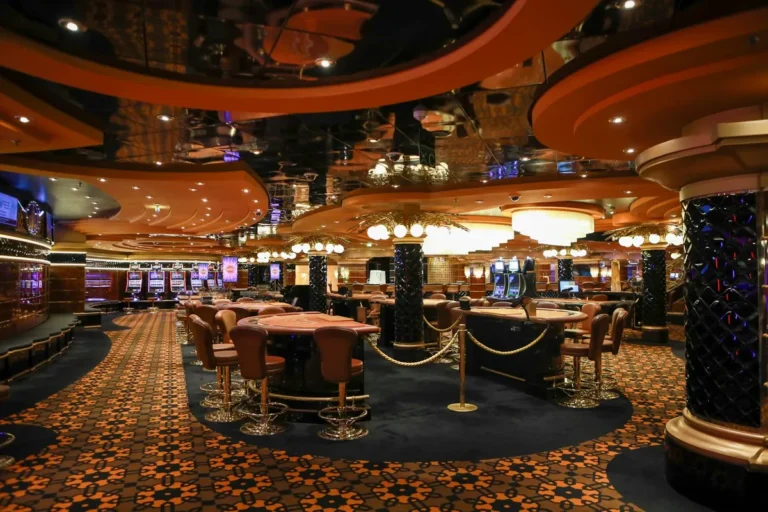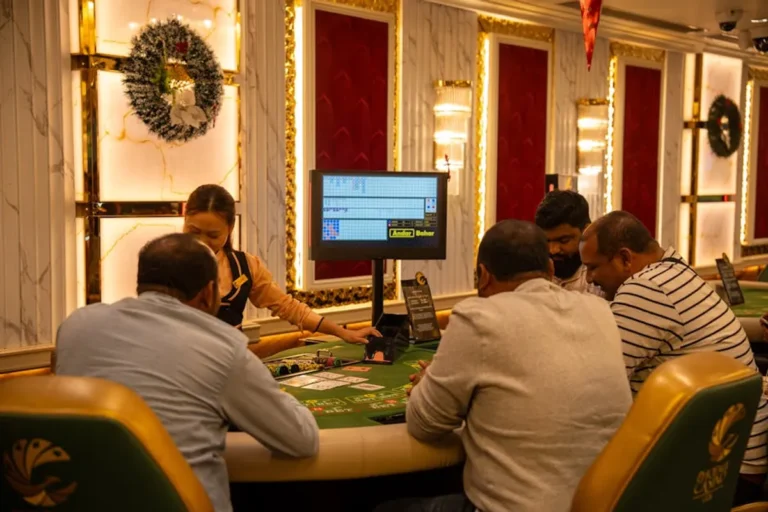

The East Asian gambling policy landscape includes some of the most varied regulatory frameworks in the world. Macau's casino-dominated economy, Singapore's tightly controlled integrated resort framework, Japan's belated and contentious casino legalisation, the Philippines' offshore gaming regime, and Korea's narrow Toto framework all coexist in a region small enough that comparative analysis is operationally useful.
This essay considers the Korean position in regional comparative perspective and what the comparison reveals about distinctive features of Korean gambling policy.
The Macau model
Macau has the most casino-saturated economy in the world. Casino activity dominates the territorial economy at scales no other jurisdiction approaches. The Macanese casino sector has functioned as a regional draw for visitors from across East Asia, particularly mainland China during the period of legal Chinese visitor traffic to Macau.
The Macau model represents one extreme of regional possibility. Casino-dominated economic structure, foreign-visitor dependence, regulatory framework focused on operational management of a substantial industry rather than on access restriction. The model has produced enormous economic activity and substantial harm metrics in roughly the proportions one would expect from full-scale casino legalisation.
Korean policymakers have generally treated the Macau model as a cautionary example rather than as an aspirational model. The cultural distance between the Macanese and Korean policy environments is sufficient that direct adoption was never realistic. The implicit comparison nonetheless shaped Korean thinking about what to avoid.
The Singapore model
Singapore implemented integrated resort casino legalisation in the 2000s under specifically designed regulatory framework. Two integrated resort casinos were authorised. Singapore residents face entry levies and other access frictions intended to reduce domestic harm while permitting foreign-visitor activity. The framework has been studied internationally as a model for controlled casino legalisation.
The Singapore model represents a middle position between full legalisation and prohibition. The empirical experience has been mixed. The economic objectives have been substantially achieved. The harm metrics have been meaningful but lower than fully unrestricted alternatives would produce. The framework has required continued regulatory adjustment as the experience has accumulated.
Korean policymakers have looked at the Singapore model with cautious interest. Specific elements including entry levies and integrated-resort structuring have been considered for possible application in Korean context. The framework as a whole has not been adopted, but its features have influenced Korean thinking more directly than the Macau model has.
The Japanese position
Japan has historically maintained a policy framework similar to Korea's in significant respects. Pachinko has occupied a regulatory grey zone for decades under technical legal classifications that distinguished it from formal gambling. Casino legalisation was repeatedly debated and finally implemented through the Integrated Resort Implementation Law in 2018, with operational implementation continuing.
The Japanese trajectory provides the closest regional comparison to Korea's policy position. Both countries have maintained narrow legal frameworks for decades. Both have faced periodic pressure for expansion. Both have substantial illegal gambling activity that the legal frameworks have only partially channelised. Japan's decision to authorise integrated resort casinos represents a policy direction that Korea has not taken but that Korean policymakers have observed closely.
The Japanese implementation of integrated resort casinos has been slower and more contested than the original legislation envisioned. The political backlash and operational complications have been substantial. From Korean policy perspective, the Japanese experience provides reasons for caution about similar policy directions.
The Philippine offshore framework
The Philippine Offshore Gaming Operator framework authorised gambling operators serving foreign customers from a Philippine licensed base. The framework was substantially expanded across the 2010s and produced significant operator activity targeting Chinese and other Asian customers.
The framework has subsequently faced substantial restriction and review under more recent administrations. The compliance and reputational issues that emerged across the period have produced regulatory tightening that is ongoing.
The Philippine experience represents a cautionary case about offshore-licensed gambling regimes generally. The economic activity such regimes can produce comes with reputational and compliance costs that may exceed the economic benefits. Korean policy has not entertained equivalent frameworks and the Philippine experience reinforces the case against doing so.
What Korea's position distinctive
The Korean Toto framework occupies a specific position that differs from each of the regional comparators in identifiable ways.
It is narrower than any of the regional comparators in product range. Toto is sports betting only. Casino activity is foreigner-only with the single Kangwon Land exception. Online activity is largely illegal and uncontrolled. The legal product range is the smallest of any major East Asian jurisdiction.
It uses single-operator structure rather than multi-operator competition. The Sports Toto monopoly is consistent with broader Korean policy preferences for state-organised provision of sensitive services but is unusual in regional gambling context.
It directs revenue toward specific public funding objectives more centrally than other regional frameworks. Sports Toto revenue funds specific sports and youth development purposes through structurally separate funds. The hypothecation of revenue is more rigid than the budgetary treatment of gambling revenue in most other jurisdictions.
It has generated less controversy and policy debate than the gambling frameworks of regional comparators. Korean society has not had the active debate that Japan has had over casino legalisation, that Singapore has had over integrated resort impacts, or that the Philippines has had over offshore gaming. The relative quiet around Korean gambling policy is itself distinctive in regional perspective.
What the comparison suggests
The regional comparison suggests several things about Korean gambling policy.
The Korean framework is at the conservative end of the regional spectrum on most relevant dimensions. This is a deliberate position rather than an accidental one. Korean policymakers have repeatedly chosen the conservative direction when faced with choices.
The Korean framework has produced lower harm metrics than would be expected under more permissive frameworks. This is a real benefit that the framework should receive credit for.
The Korean framework has also produced lower economic activity than would be expected under more permissive frameworks. The trade-off has been judged worthwhile by Korean policy across multiple administrations of varying political orientation.
The Korean framework has not engaged seriously with the channelisation question that frameworks in other jurisdictions have foregrounded. The illegal market has been treated more as a law-enforcement matter than as a policy-design challenge. This is a gap that the regional comparison highlights.
The Korean framework has been less responsive to the digital transformation of gambling than frameworks in some other jurisdictions. The smartphone-mediated gambling activity that has reshaped operator economics elsewhere has been substantially absent from Korean policy engagement. This too is a gap that the regional comparison highlights.
What the next phase might look like
The regional context suggests that Korean policy will face increasing pressure to engage with questions it has historically declined to engage with. The Japanese casino implementation creates a regional benchmark that will be referenced. The continued growth of unregulated digital gambling activity creates pressure for some policy response. The cultural shift among younger Koreans creates political space for debates that have not been politically possible.
The framework is unlikely to converge toward Macau-style or even Singapore-style structures. Korean policy preferences are durable enough that fundamental change is improbable. Marginal adjustment is more likely. The question is whether the marginal adjustment will be coherent and considered or piecemeal and reactive.
This is the policy environment in which Korean Toto and Korean gambling policy more broadly will operate across the next phase. The current quiet is unlikely to be sustainable indefinitely. Better policy preparation would produce better outcomes when the engagement becomes unavoidable.