
Korean problem-gambling treatment has developed over the past two decades primarily through the Korea Center on Gambling Problems and a network of regional treatment centres that work with people whose gambling activity has become harmful. The infrastructure is smaller than what the underlying need would justify. The specific lessons it has produced deserve broader attention than they have received in the international literature.
This essay surveys the operational lessons and considers what they suggest for treatment design elsewhere.
The Kangwon Land treatment context
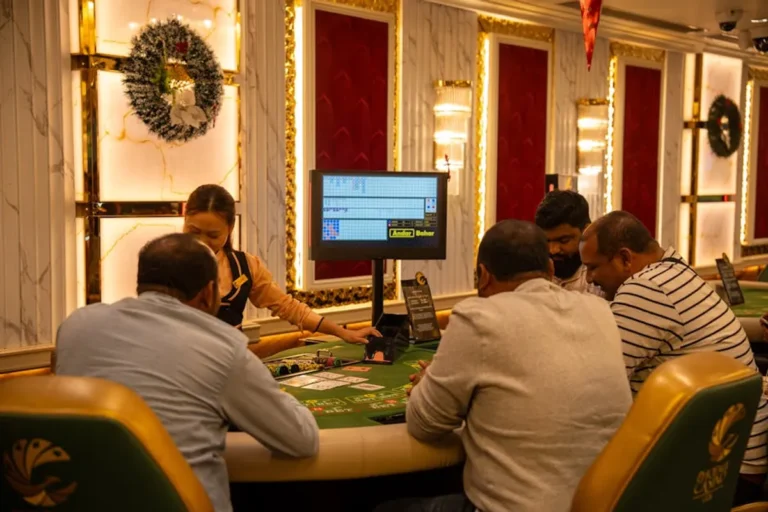
A meaningful share of Korean treatment infrastructure has developed around the specific case of repeat visitors to Kangwon Land, the only domestic-accessible casino. The concentration of cases at Kangwon Land has produced an unusual research environment in which a single venue accounts for a substantial share of treatment-seeking population.
This concentration has produced specific operational lessons. The clinical population at Kangwon Land is not representative of the general problem-gambling population. The cases tend to be more advanced, with more co-morbid financial and family problems. The treatment approaches that work for this population are not necessarily the same as the treatment approaches that work for problem gamblers identified earlier in their gambling trajectories.
One of the lessons is that early intervention matters substantially. Cases identified at the convenience-store Toto level or at the early online-betting level respond to intervention very differently than cases identified after years of casino visits. The infrastructure needs to extend across the full range of severity rather than concentrating on the most acute presentations.
Family-centred treatment frameworks
Korean treatment has developed family-centred treatment frameworks more substantially than equivalent infrastructure in many other jurisdictions. The cultural context — in which family financial obligations are more central than in many Western contexts — has made family involvement in treatment both more necessary and more accepted.
The operational lessons from family-centred treatment include specific points about case management. Treatment plans that engage spouse, parent, and adult-child relationships produce better adherence and better outcomes than treatment plans that engage only the individual gambler. The family financial situation often needs to be addressed as part of the treatment trajectory rather than as a separate matter.
Cultural adaptation matters substantially. Family-centred frameworks that work in Korean cultural context require adaptation for use in other cultural contexts. The underlying lesson — that treatment should engage the relational and financial context the gambler is embedded in — is more transferable than the specific Korean implementations.
Financial counselling integration
Korean treatment has integrated financial counselling more centrally than most Western treatment frameworks have. The reasoning is operational. Problem gambling typically produces specific financial problems — debt, asset depletion, sometimes legal exposure — that are themselves obstacles to recovery. Treatment that addresses the gambling without addressing the financial situation typically produces relapse when financial pressure becomes acute.
The specific Korean innovation has been to include financial counsellors in treatment teams alongside clinical staff. The financial counsellors work on practical questions — debt restructuring, family financial planning, employer relationships — that clinical staff are not trained to address. The combination produces better outcomes than clinical treatment alone.
This is straightforward operationally but requires institutional infrastructure that many treatment systems have not built. Funding the financial counselling component is often the limiting factor. Where the funding has been available, the outcomes have been documented.
Workplace engagement
Korean cultural context places employment at the centre of adult identity in ways that affect how problem gambling treatment can engage with the workplace. Korean employers are more likely than employers in many Western contexts to be involved in employee personal difficulties when those difficulties affect work performance.
Korean treatment has developed specific protocols for workplace engagement. With appropriate consent and confidentiality protections, treatment teams can work with employer human-resources functions to address employment-related dimensions of problem gambling. The protocols include specific safeguards against discrimination but also specific practical interventions including modified work schedules during intensive treatment periods.
This is a culturally specific approach that may not transfer directly to other contexts. But it has produced operationally useful results in the Korean context where it has been implemented. The underlying lesson — that treatment should engage with the workplace context where the cultural context permits — is worth engaging with even where direct transfer is not possible.
What Korean treatment has not solved
Korean treatment infrastructure has not solved several problems that no problem-gambling treatment infrastructure anywhere has solved.
Treatment-seeking remains low relative to underlying need. The proportion of people experiencing problem gambling who actually engage with treatment is low across all jurisdictions including Korea. The reasons are not specifically Korean and are not specifically resolvable through Korean treatment-design innovations.
Long-term outcome measurement remains difficult. The treatment outcomes that can be measured at six-month and twelve-month follow-up are easier to capture than the outcomes that matter most, which involve sustained behaviour change across years. Korean treatment has engaged with this measurement challenge but has not solved it.
The relationship between treatment and the underlying regulatory framework remains under-developed. Treatment infrastructure addresses individual cases. The regulatory framework that produces the case flow is largely separate. The institutional integration that would allow treatment learning to inform regulatory design has not been built in Korea or in most other jurisdictions.
What the international community could learn
The Korean treatment infrastructure has produced specific operational lessons that deserve broader engagement.
The case for early intervention infrastructure that extends across the full severity spectrum.
The case for family-centred treatment frameworks adapted to local cultural context.
The case for integrated financial counselling alongside clinical treatment.
The case for workplace engagement where cultural context permits.
The case for sustained measurement of long-term outcomes despite the operational difficulty.
None of these lessons is uniquely Korean. All are derivable from the operational experience of Korean treatment infrastructure. The international literature has under-engaged with the Korean experience. The lessons deserve more attention than they have received.
This is a small contribution toward that engagement. The Korean treatment community has done substantial work that the international community could benefit from understanding. More cross-jurisdictional dialogue would serve everyone working on these difficult problems.